

CHRONICLE MASK
A project by Yuri Shakhoyan exploring the value of the physical trace and the moment of transition to the digital.
About the project
Algorithms displace living human memory, turning our recollections into alienated cloud code, while smartphone screens erode our sense of physicality. We leave more traces than any previous era, yet the right to control them no longer belongs to us, and touch itself has been reduced to a function. The “Chronicle Mask” restores to the individual the right to make a gesture and to leave tangible evidence of their own existence.
The trace is magnified here and now: the space beyond the digital enclosure is shrinking, and in the foreseeable future even clay will be equipped with sensors. The project functions as an archaeology of the future, capturing a moment of transition while it is still discernible. Emerging from the exhibition “Eternity Game,” which Shakhoyan has been developing since 2019, it is conceived as a continuous transformation of a single object through four states.
STAGES

Archetype
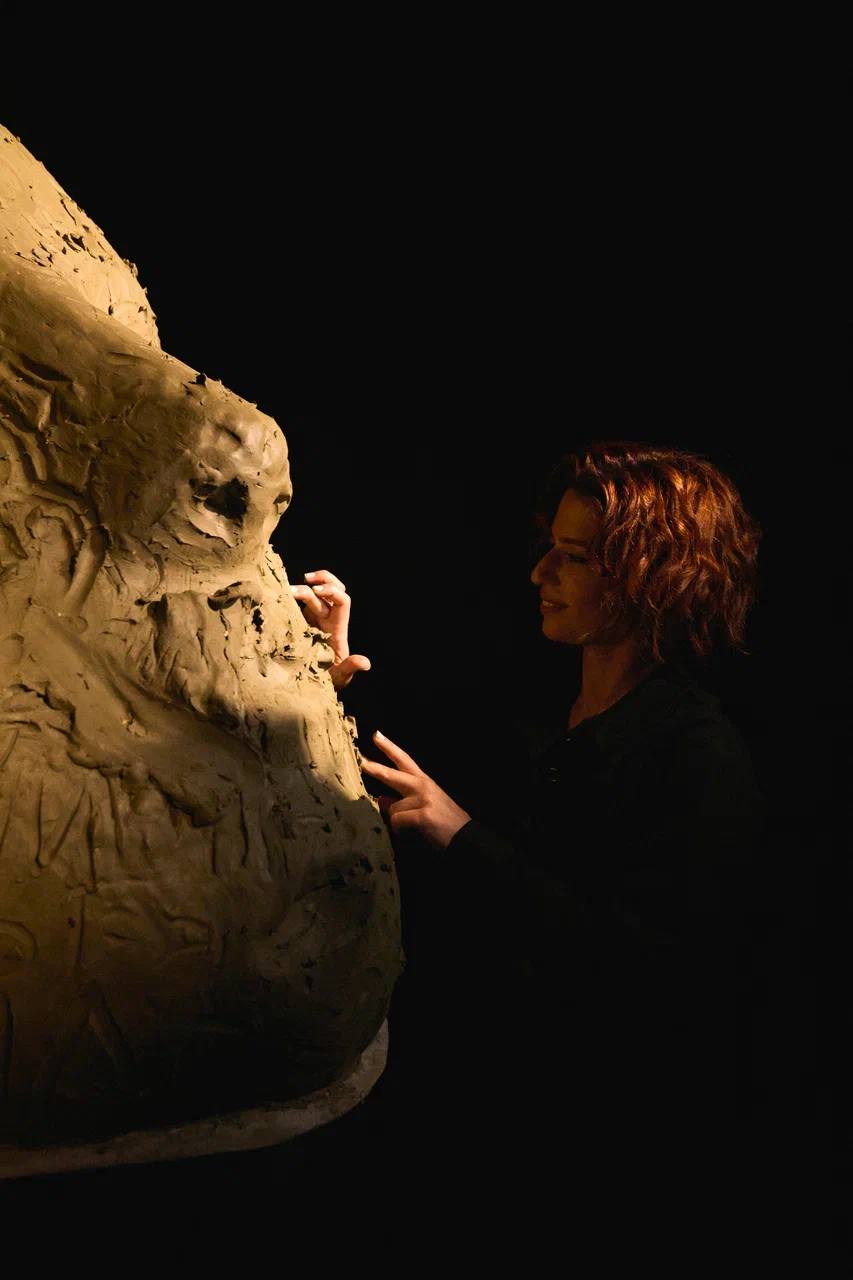
Raw clay as the primary material: a 110-centimeter-high form, deliberately archaic and featureless. It depicts nothing; instead, it offers itself as an unfinished presence.

Chronicle of Hands
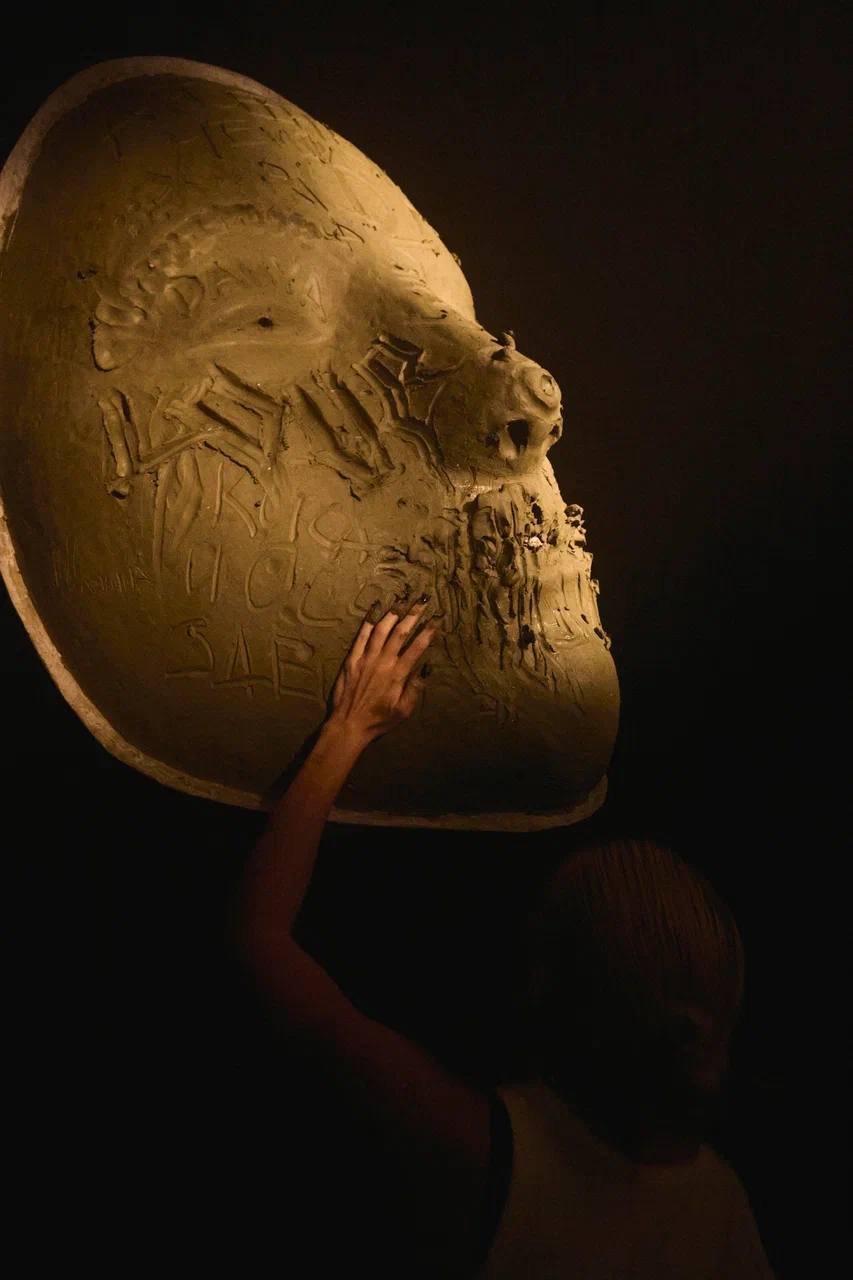
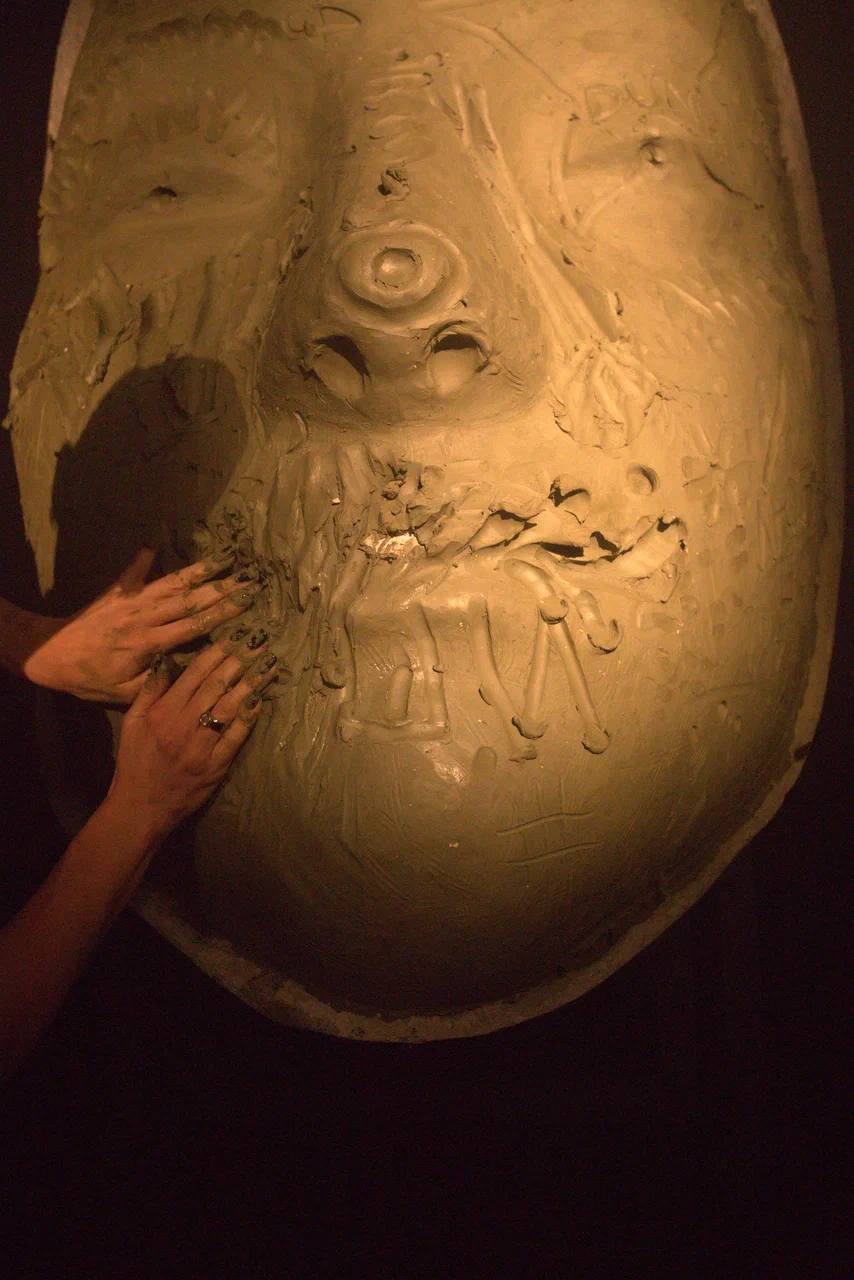
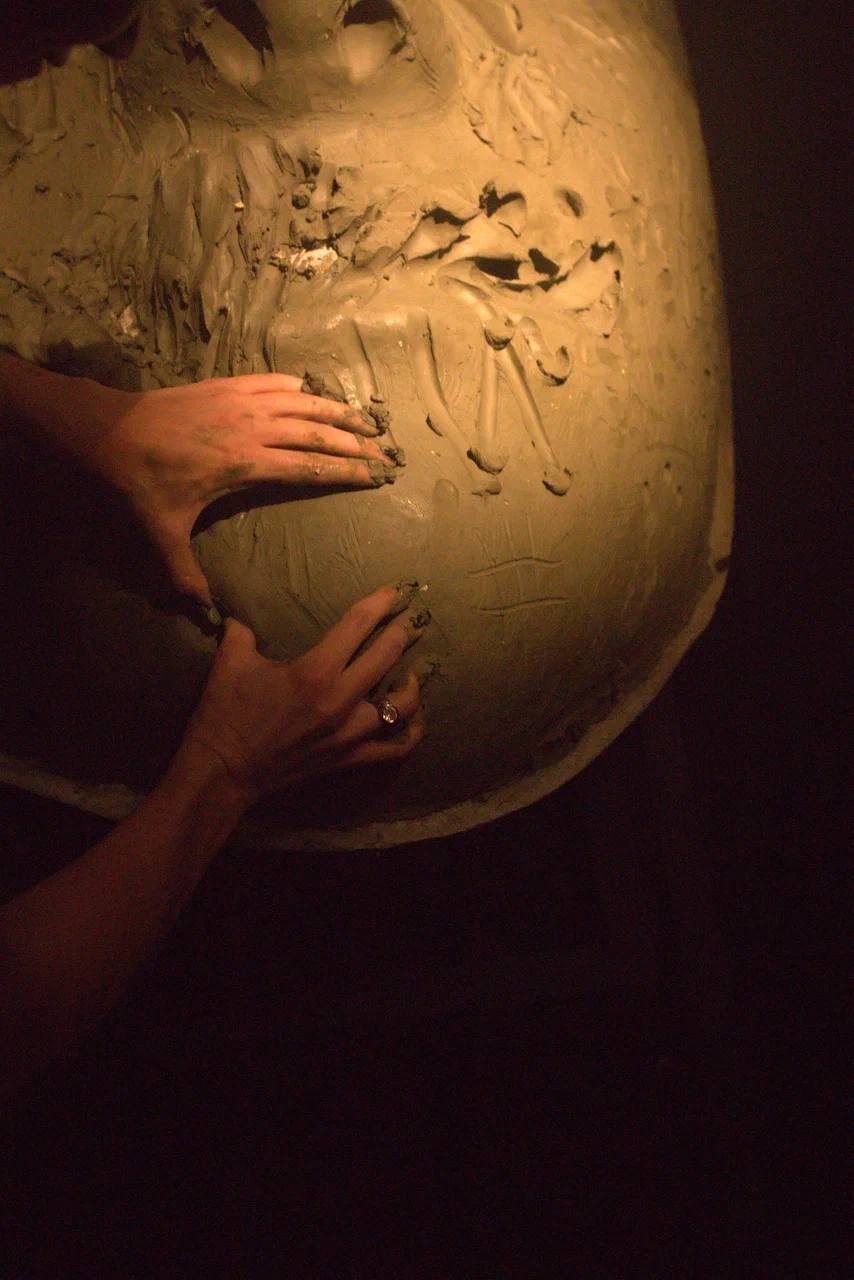
The stage was conceived as intimate: one person alone with the material. Instead, participants approached in groups and returned repeatedly, leaving inscriptions, stains, and impressions of objects, correcting and layering one another’s patterns. Individual authorship dissolved into co-authorship; the surface became a carrier of collective memory, and the object shifted from representation to indexicality—the physical evidence of a contact that had taken place. A living human nerve emerged through touch, resisting the cold conveyor belt of algorithmic recording, while the deformation became a therapeutic act for a society losing its physicality. That same evening, Shakhoyan gathered the accumulated chaos into a single image and gave the object its name.

Event Memory
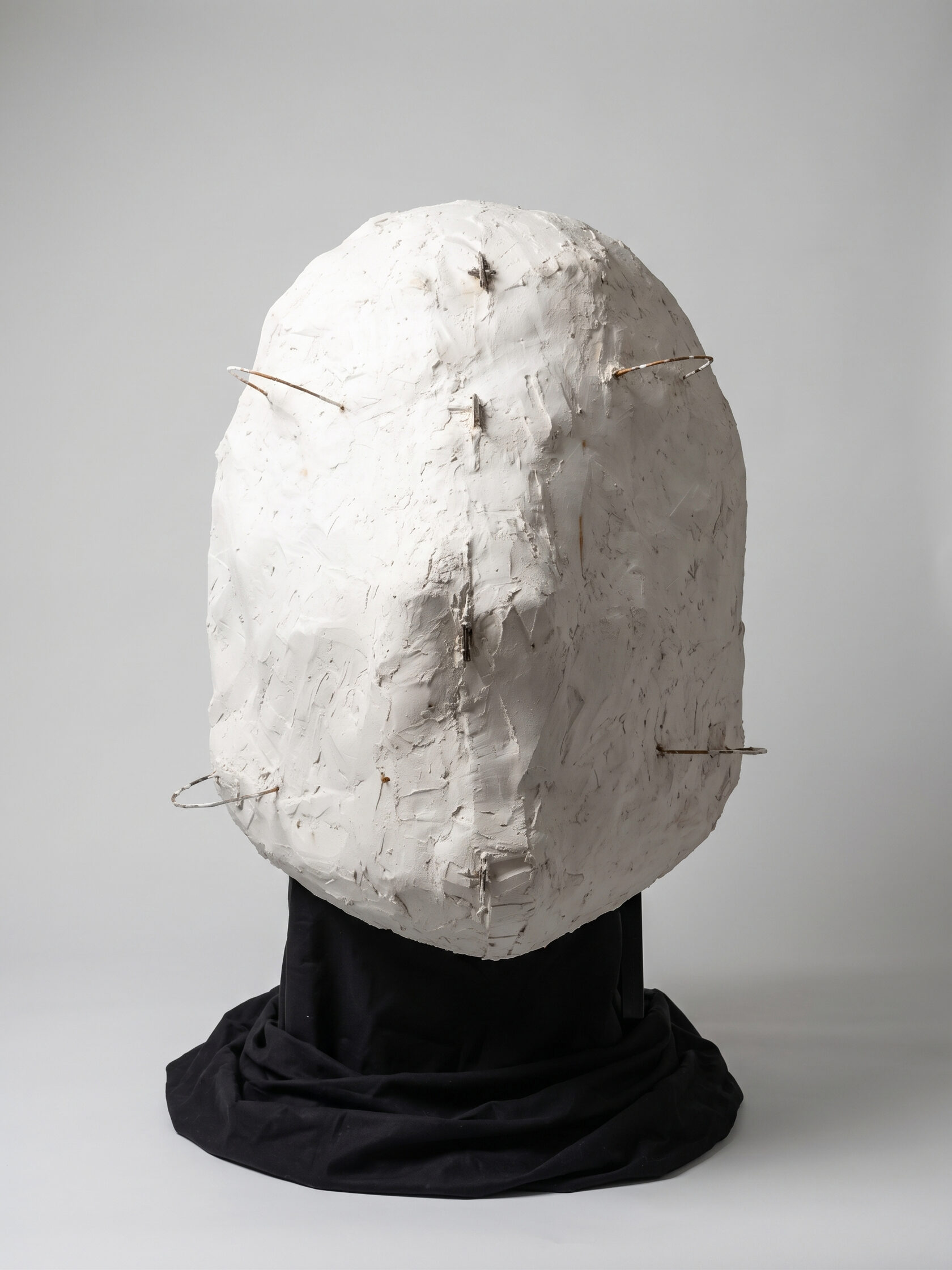
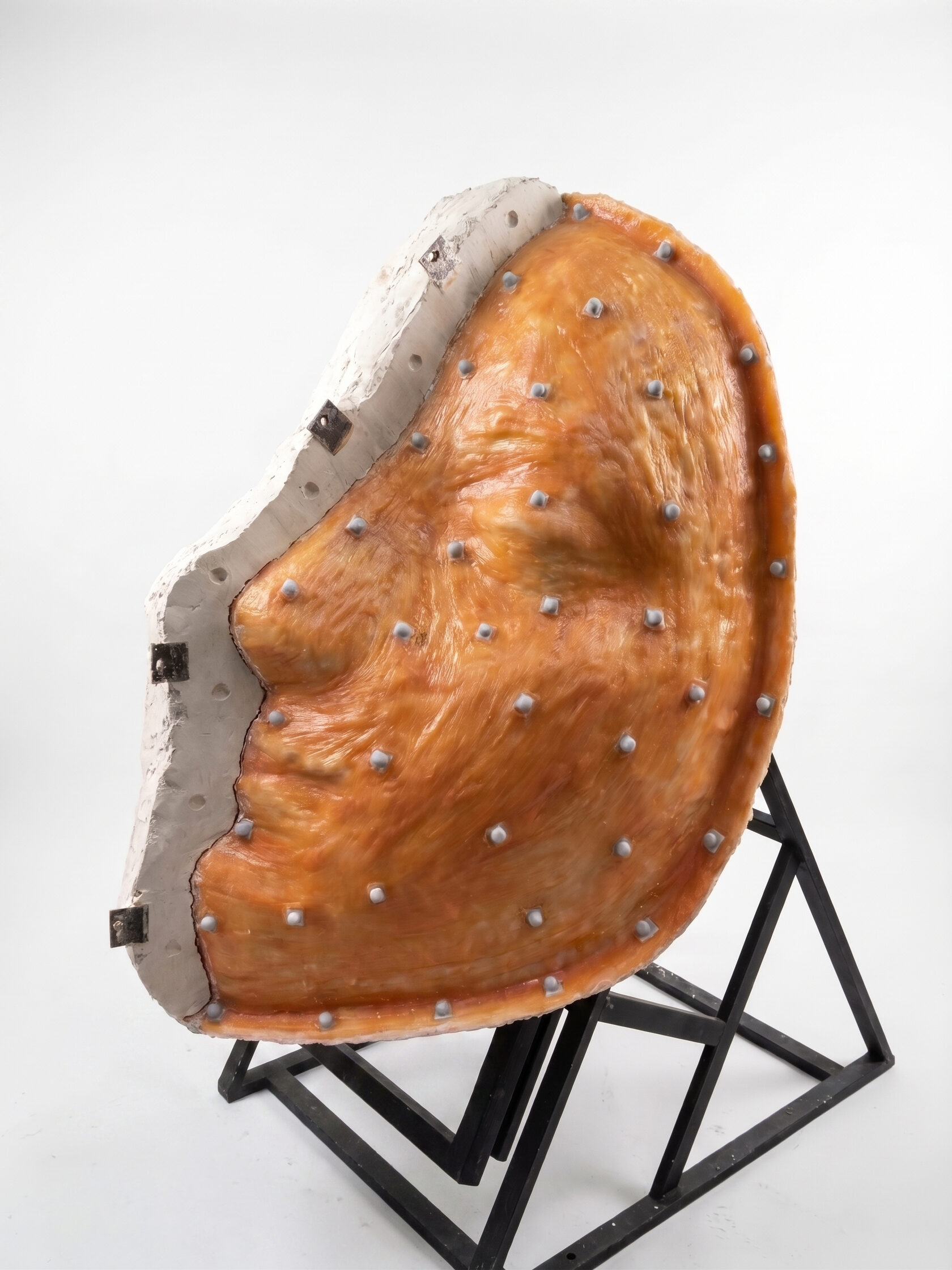
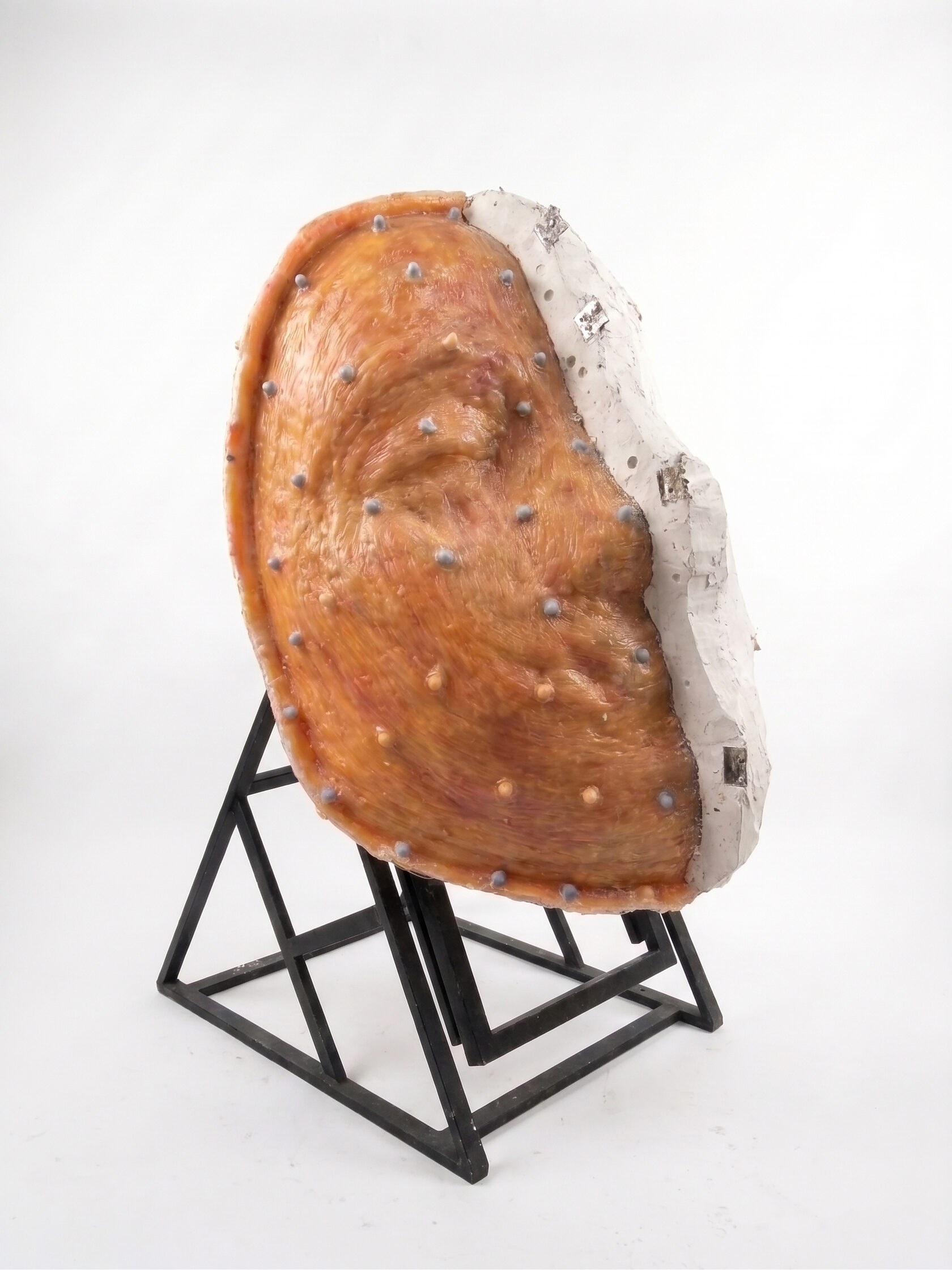
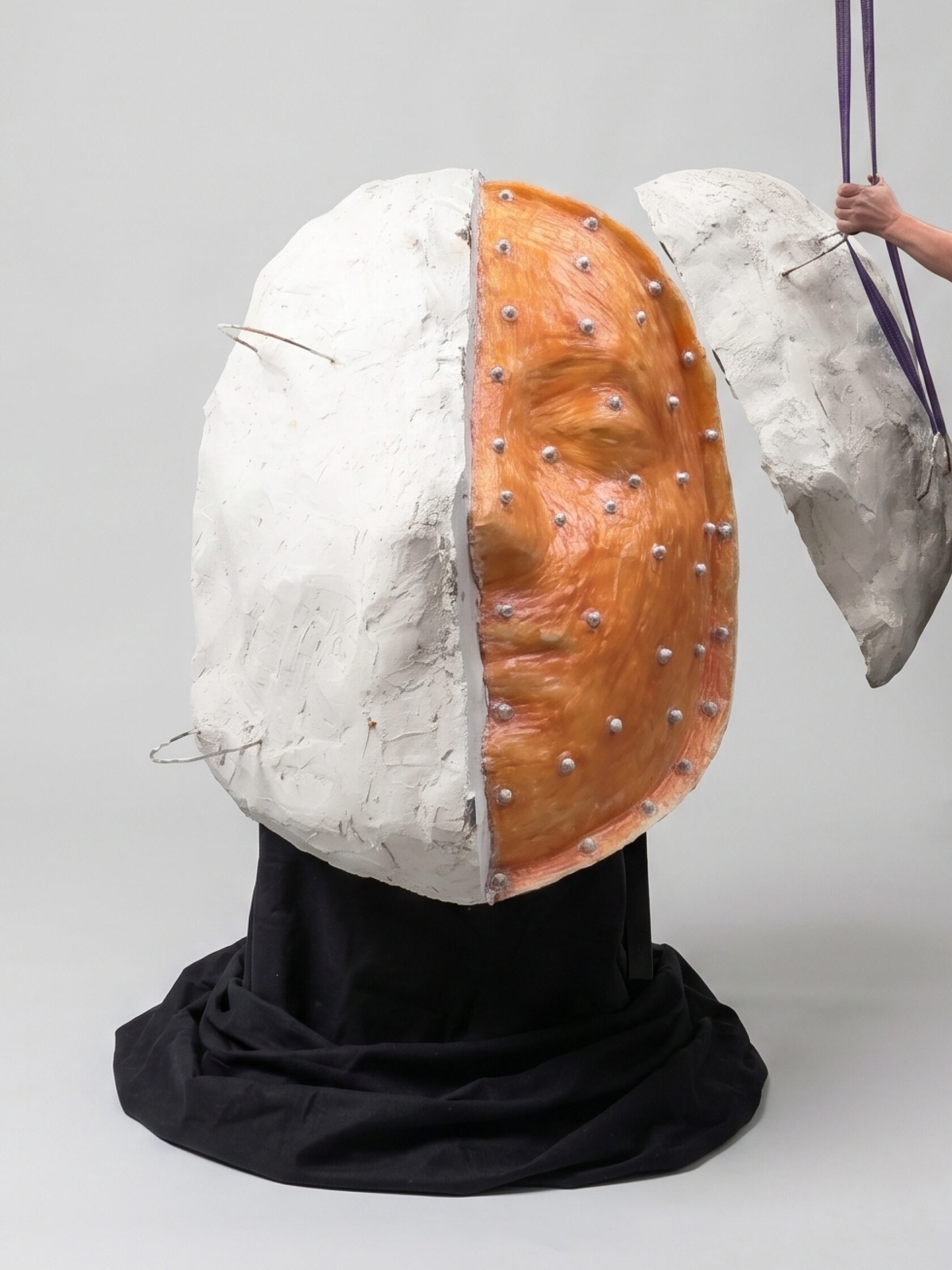
In June, the body of the event shifted from clay to metal: what could once be wiped away with the palm of a hand became a finished form. The artist added a pure visage to the reverse—the state that precedes all experience.

Diptych of Time
In August, at the Signal Festival, the project split in two. The clay version was surrendered to entropy: rain and wind washed away the handprints, and the boundary between gesture and the texture of the earth disappeared. The aluminum version became its technological antipode, the “black box” of civilization, preserving collective memory: a single object existed simultaneously in two modes of duration.
The base of the aluminum mask remained open: throughout the Festival, visitors added signs, words, and thoughts to it. Thus the palimpsest emerged—an analog equivalent of digital noise and a document resistant to moderation, a cultural layer upon which the archetype rested.
The result was a cast of society at a specific historical moment. No one knows when the object will be broken down—five years from now or fifty. The premonition itself has been recorded. The final version of the work will be presented at a charity auction, where the trace left by thousands of hands will become a contribution toward helping others.
See the process
From Clay to a Single Image
Examine the Traces
How the “Chronicle Mask” Was Created
A Piece of History That Can Be Saved
Leave your contact information
And we will keep the option open for you to become the owner of one of the copies.
YURI SHAKHOYAN
is an artist whose practice centers on the transformation of archetypal forms
is an artist whose practice centers on the transformation of archetypal forms
The scale of his works ranges from small forms that can be held in the palm of the hand to a 12-meter-high concrete column.
The artist’s works are represented in the collections of Sergei Polonsky, Artemy Lebedev, Nelly Kobzon, the Vitorgan family, Mark Lee, Sion Sono, as well as in private and public collections in Russia, Europe, the United States, the CIS countries, and Japan.
The artist’s works are represented in the collections of Sergei Polonsky, Artemy Lebedev, Nelly Kobzon, the Vitorgan family, Mark Lee, Sion Sono, as well as in private and public collections in Russia, Europe, the United States, the CIS countries, and Japan.